Updated 30 September 2026
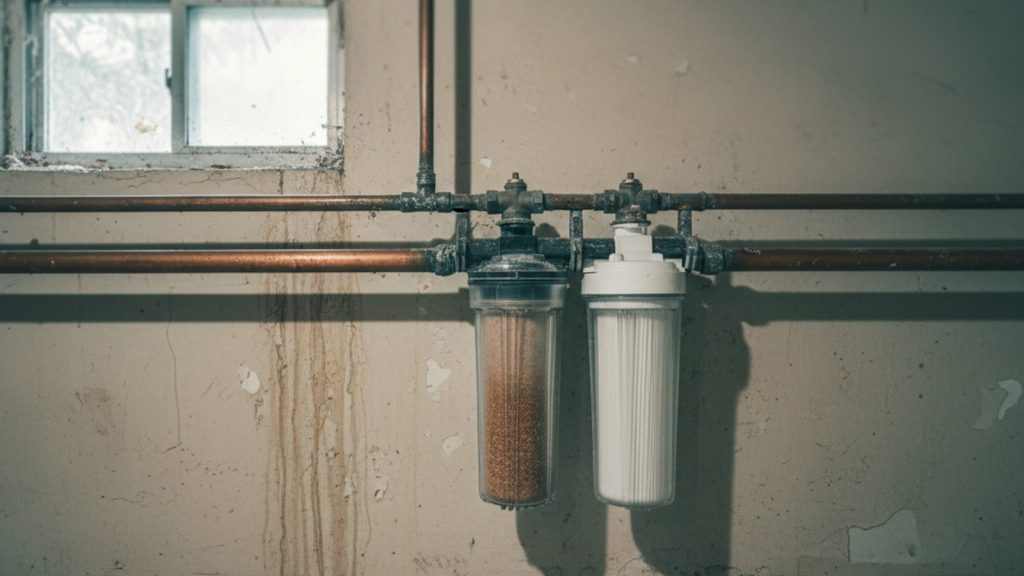
Use a coarse 20 to 50 micron stage for visible grit, followed by a finer 5 to 10 micron cartridge for the particles that make water look cloudy, matched to what the water actually carries. A reusable spin-down filter ahead of a cartridge protects the fine stage from clogging early, which is the two-stage setup most wells with real sediment load end up needing.
A coarse 20 to 50 micron stage followed by a 5 to 10 micron cartridge covers most wells, and turbidity in ground water is generally under 5 NTU (nephelometric turbidity units), according to the U.S. Geological Survey, well below the cloudy, visibly gritty water that sends most homeowners shopping for a sediment filter. Wells still carry sand, silt, and rust particles the eye never sees at a normal reading, which is why a sediment stage belongs on nearly every private well regardless of how the water looks in a glass.
The stakes are not cosmetic. The EPA notes that more than 23 million U.S. households rely on private wells, none of them backed by a utility that filters water before it reaches the tap. A sediment filter for well water is the equipment that stands in for that missing step, and the micron rating printed on the cartridge is what actually decides what it catches.
The challenge is that micron numbers mean little without a frame of reference, and product listings rarely explain what a 5 micron rating actually screens out compared to a 25 micron one. Wells with heavy sediment load also clog filters faster than the packaging suggests, turning a filter rated to last three months into one that needs changing every three weeks.
What a Micron Rating Actually Means
A micron is one millionth of a meter, and filter ratings describe the smallest particle size the cartridge reliably traps. Coarse filters, rated 20 to 50 microns, catch sand and larger silt; fine filters, rated 1 to 10 microns, catch the smaller particles that give water a cloudy or hazy look even when nothing is visibly gritty. A nominal rating means the cartridge catches most particles of that size, while an absolute rating means it catches nearly all of them, a distinction worth checking before comparing two filters on micron number alone.
This guide sits in our Filtration & Treatment section alongside the well water filter types breakdown and the iron filter guide.
| Micron rating | What it catches | Real-world comparison | Typical use |
|---|---|---|---|
| 50 microns | Coarse sand, large silt | Roughly the width of a human hair | First-stage spin-down, heavy grit wells |
| 20-25 microns | Fine sand, rust flakes | About one-third the width of a human hair | Standard whole-house sediment cartridge |
| 5-10 microns | Fine silt, cloudiness-causing particles | Near the lower limit of what a human eye can see unaided | Second-stage polishing before carbon or UV |
| 1 micron | Very fine sediment, some cysts | Well below visible resolution | Pre-filter ahead of UV or reverse osmosis |
Spin-Down vs. Cartridge: Which One Goes First
A spin-down filter uses a reusable stainless mesh screen that gets flushed clean by opening a valve, catching coarse sediment with no ongoing cartridge cost. It is built to sit first in the line, protecting everything downstream from the heaviest grit a well produces.
A cartridge filter traps finer particles in disposable pleated or wound media, but it clogs faster if coarse sediment is not screened out ahead of it. The two-stage rule, spin-down first, fine cartridge second, is the setup that keeps replacement costs down: the spin-down handles the bulk of the load for free, and the cartridge only has to catch what is left.
Cartridge material matters too. Pleated cartridges handle higher flow rates and are often washable and reusable, which suits wells carrying coarser sand and grit. Melt-blown or string-wound cartridges trap particles throughout their depth rather than just the surface, which suits wells producing fine silt or clay that would blind a pleated surface too quickly.
USGS measurements put typical ground water turbidity under 5 NTU, and low-flow surface water below about 10 NTU. A well producing water that looks visibly cloudy or gritty at the tap is carrying sediment well above the range groundwater normally runs, which points to a well-specific issue like casing damage or pump disturbance rather than a fluke.
Source: USGS, Turbidity and Water
How Fast Sediment Filters Clog
A light sediment load lets a 20 micron whole-house cartridge run close to its rated 1 to 3 month lifespan. Heavy sediment, common after well disturbance, pump replacement, or a nearby drilling project, can clog the same cartridge in a matter of weeks, and a pressure gauge before and after the filter housing is the simplest way to catch that early.
A noticeable pressure drop across the filter, water pressure at the tap falling while the well pump still runs normally, is the clearest sign a cartridge needs changing regardless of the calendar. Waiting for a fixed schedule on a well with variable sediment load either wastes cartridges changed too early or lets a clogged one restrict flow for weeks before anyone notices.
Ask for a turbidity reading in NTU alongside any sediment complaint. A number above roughly 5 NTU on ground water is a real signal, not just aesthetic, and helps size the first-stage micron rating instead of guessing from how the water looks.
Housing size also affects how long a cartridge lasts. A standard 10 inch housing holds less filtering surface than a 20 inch “Big Blue” housing, so two homes with identical sediment load but different housing sizes can see very different replacement intervals from the same rated micron cartridge. Upsizing the housing, not just tightening the micron rating, is often the simpler fix for a well that clogs filters too fast.
Pricing a full sediment setup, spin-down plus cartridge plus housing, against the rest of a treatment plan is easier with real numbers. Our well water filtration system cost guide breaks down cost by the problem being solved.
The Challenges of Sizing a Sediment Filter
The first challenge is picking a single micron rating and expecting it to do both jobs. A cartridge fine enough to clear visible cloudiness clogs too fast to survive heavy grit, and a cartridge coarse enough to survive heavy grit does not clear cloudiness on its own.
The second challenge is treating sediment filtration as the end of the job rather than the beginning. Sediment filters do not touch dissolved iron, hardness, or bacteria, so a well with multiple issues still needs those addressed separately even after the water runs visibly clear.
Sediment is only one of several possible causes behind discolored water. Our brown well water diagnosis guide walks through the others by color and pattern before you commit to a filter.
The third challenge is flow rate mismatch. A sediment housing undersized for the home’s peak demand restricts water pressure even with a clean cartridge installed, which reads as a filter problem when it is really a sizing problem against the household’s fixture count.
Seasonal timing matters too. Wells often carry more sediment right after spring thaw or heavy rain, when the water table shifts and disturbs fine particles near the well screen. A filter that runs three months clean in summer can clog in half that time during a wet spring, which is worth planning for rather than treating as a filter defect.
A sudden spike in sediment right after a storm has its own diagnosis path. Our well water cloudy after rain guide covers what is happening underground and when the cloudiness should clear on its own.
How to Choose the Right Sediment Filter Setup
Start with a turbidity and sediment reading rather than guessing from appearance, then build a two-stage system: a reusable spin-down rated 20 to 50 microns to catch the bulk of the load, followed by a 5 to 10 micron cartridge to clear what remains. Size the housing to the home’s peak flow rate, not just the average, so pressure holds steady when multiple fixtures run at once.
Once sediment is under control, it becomes the foundation the rest of a treatment train depends on. Reviewing how sediment fits into the full lineup of stages in the well water filter guide makes it easier to plan carbon, iron, or UV additions without sediment clogging them prematurely.
Before or After the Pressure Tank?
After, always on the house side. A filter installed between the pump and the pressure tank restricts flow while the pump is pushing at full rate, forces the motor to labor against a loading cartridge, and starves the tank of pressure as the filter clogs. Downstream of the tank, water arrives at regulated pressure, the cartridge clogs gracefully instead of stressing the pump, and a gauge on each side of the housing shows exactly when a change is due. The one partial exception is a spin-down screen protecting a pump-house manifold, which some installers place ahead of the treatment train, but still after the tank.
Frequently Asked Questions (FAQs)
What micron rating do I need for well water?
Most wells benefit from a two-stage setup: 20 to 50 microns for coarse sediment and 5 to 10 microns for the finer particles that cause cloudiness. Wells feeding a UV system or reverse osmosis unit downstream often need a 1 micron final stage to protect that equipment.
How often should sediment filters be replaced?
A standard cartridge lasts 1 to 3 months under light sediment load, but heavy load can clog the same filter in a few weeks. Watching for a pressure drop across the filter housing is more reliable than a fixed calendar for wells with variable sediment.
Will a sediment filter remove iron from well water?
Only the particle form. A sediment filter captures rust-colored particles from iron that has already oxidized, but it passes dissolved iron straight through since that iron has not yet formed a solid particle to trap. Dissolved iron needs a dedicated iron filter or water softener stage instead of a sediment filter alone.
Do I need pre-filtration before other well water equipment?
Yes. Sediment shields UV bulbs, protects softener resin from abrasion, and prevents downstream cartridges from clogging prematurely. A sediment stage installed first extends the working life of every filter and appliance installed after it.
Should I choose a spin-down filter or a cartridge filter?
Use both. A spin-down filter ahead of a cartridge catches coarse sediment for free with a reusable mesh screen, while the cartridge behind it handles the finer particles a spin-down cannot. Running a cartridge alone on a well with heavy sediment leads to clogging far faster than the rated lifespan suggests.



