Updated 30 September 2026
Reverse osmosis is a point-of-use polish for drinking water, best suited for removing dissolved chemicals a filter cannot catch. On well water, it needs iron, sediment, and hardness treated first, since untreated well water fouls an RO membrane far faster than pretreated water does.
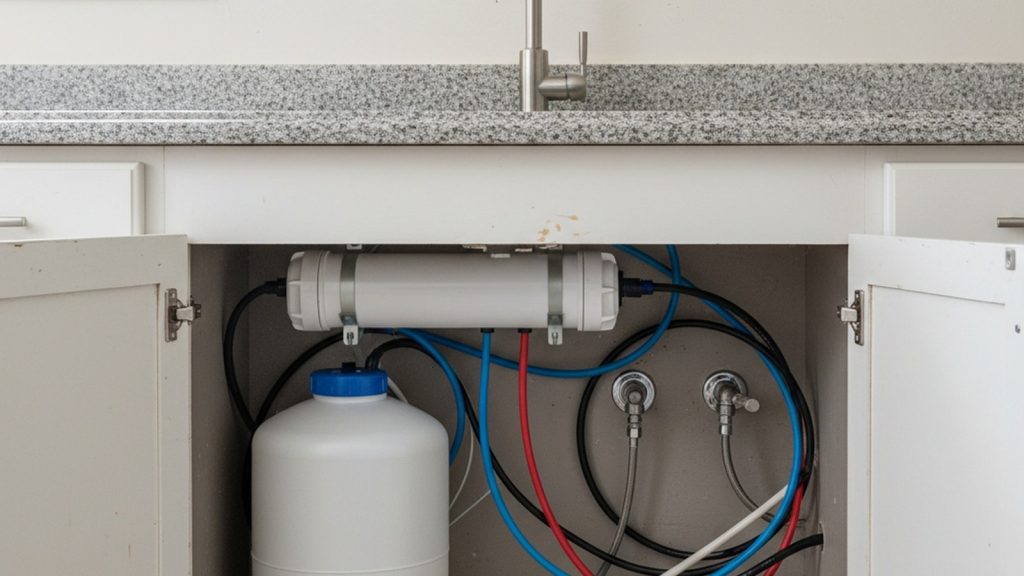
Reverse osmosis for well water is a drinking-water polish, not a whole-house fix, and the two roles get confused constantly. The CDC describes RO filters as having a pore size of about 0.0001 micron, small enough to remove parasites, bacteria, viruses, lead, copper, chromium, chloride, and sodium from water pushed through the membrane. That is real, measurable filtration, but it happens at one tap, not across a house.
Most well owners need RO because of what is already in their water, not despite it. The EPA estimates that water pumped from about one in five private wells contains a contaminant above a human-health benchmark, and RO is one of the few home systems capable of removing dissolved chemicals a sediment or carbon filter cannot touch.
The honest complication is what comes before the membrane. Iron and sediment, both common in well water, foul an RO membrane faster than the same water would after whole-house pretreatment, so buying RO for a well without addressing those two problems first usually means an expensive membrane replacement within months instead of years.
How Reverse Osmosis Works on Well Water
Reverse osmosis pushes water through a membrane fine enough to block dissolved substances that pass straight through ordinary filters. The CDC’s own description of the process notes that RO removes parasites, bacteria, and viruses outright, and removes or reduces a long list of dissolved chemicals, including lead, copper, chromium, chloride, sodium, arsenic, fluoride, radium, sulfate, calcium, magnesium, potassium, nitrate, and phosphorous, depending on the specific system.
This guide sits in our Filtration & Treatment section alongside the full treatment overview and the iron filter guide.
That range is exactly why RO gets marketed as a cure-all. In practice, it treats the water at whichever tap it is installed on, almost always a single kitchen faucet for a point-of-use system, and does nothing for the rest of the house unless installed as a larger whole-house configuration, which is far less common and considerably more expensive to run. Total dissolved solids, or TDS, is the number worth tracking over the system’s life: a rising TDS reading in the treated water is the signal that the membrane needs replacing.
What Well Water Needs Before It Reaches an RO Membrane
Hardness is the most common cause of RO membrane failure on well water. Water treatment technical guidance is direct on this point: hardness scales a membrane over time if it is not treated first, and pretreatment with a water softener is standard practice whenever hardness exceeds an RO system’s rated limits.
Iron behaves differently depending on its form. Clear-water, dissolved (ferrous) iron is removed effectively by a water softener or a dedicated iron filter, while particulate (ferric) iron, the kind that shows up as visible rust-colored specks, is removed by a fine sediment filter or an iron filter before it ever reaches the membrane. An iron filter sized to your well’s iron level is the pretreatment step that protects an RO membrane from the fouling that untreated iron causes.
Household water pressure matters too. An RO membrane depends on incoming pressure to push water through and reject dissolved solids effectively, so a well with weak pressure at the tap needs a booster pump ahead of the RO unit rather than expecting the membrane to perform on pressure it never receives.
| Situation | RO alone OK? | Pretreatment needed |
|---|---|---|
| Clean municipal-quality well water, low hardness and iron | Yes | None, or a basic sediment prefilter |
| Hard water above the RO system’s rated limit | No | Water softener |
| Dissolved (ferrous) iron | No | Water softener or iron filter |
| Particulate (ferric) iron or visible sediment | No | Fine sediment filter or iron filter |
| Sulfur odor or bacteria present | No | Oxidation, UV, or shock chlorination first |
Challenges That Undermine an RO System on Well Water
The first challenge is buying RO before testing the well. Installing a membrane system without knowing the hardness, iron, and sediment levels in the water means the fouling risk is unknown until the membrane fails early and needs replacing.
The second challenge is treating RO as a whole-house solution. A point-of-use system under one sink does nothing for the hardness scaling a water heater or the iron staining a shower, which leads some homeowners to conclude RO failed when it was never treating those problems in the first place.
The third challenge is ignoring the ongoing cost of concentrate. Every RO system sends some treated water down the drain as reject water, and that ratio varies widely between models, an ongoing cost that is easy to overlook when comparing only the sticker price of the unit.
Hardness is the most common membrane foulant in reverse osmosis systems, and if untreated, it scales the membrane over time and shortens its working life. Pretreatment with a water softener is strongly recommended whenever hardness exceeds the RO system’s stated limits, and iron requires a separate step depending on whether it is dissolved or particulate.
Reverse Osmosis vs. Whole-House Filter
A whole-house filter treats every tap in the home for sediment, iron, and often hardness, protecting plumbing, appliances, and water heaters from mineral buildup and staining. RO treats a single tap to a much higher standard, removing dissolved chemicals a whole-house filter does not catch.
Most well owners with elevated contaminants need both, in a specific order: whole-house filtration first to protect the plumbing and the RO membrane, then RO at the kitchen tap for drinking and cooking water. Skipping the whole-house step and installing RO alone leaves the rest of the house unprotected while shortening the membrane’s life.
The Real Cost of Owning an RO System
The EPA notes that a typical point-of-use RO system sends five gallons or more of water down the drain for every gallon of treated water it produces, and some inefficient units waste up to 10 gallons per gallon treated. That reject water is a real ongoing cost, separate from the filter cartridges and membrane replacement every RO system needs on a schedule.
Efficiency varies a great deal between models. WaterSense-labeled RO systems are certified to waste 2.3 gallons or less per gallon of treated water, cutting reject water dramatically compared to an inefficient unit. Tankless designs and systems built around a permeate pump are how many of these efficient models get there, recovering more of the water instead of sending it straight to the drain. Checking a system’s waste ratio before buying is as important as checking its contaminant removal claims, since a wasteful unit adds a real water cost every single day it runs.
Test your water first, treat hardness and iron before the membrane sees them, and check the waste ratio on the specific RO model you are considering. Skipping any one of those three steps is the most common reason an RO system on well water underperforms or fails early.
How to Decide Whether Your Well Water Needs RO
Start with a water test that reports hardness, iron, and any dissolved chemicals such as arsenic, nitrate, or fluoride. If those numbers come back low, a whole-house filter alone covers the household’s needs without adding RO. If dissolved chemicals show up above a safe level, RO becomes the practical answer for drinking water specifically, installed after pretreatment handles hardness and iron.
A full breakdown of well water filtration types is the place to confirm which pretreatment your specific test results call for before an RO system goes anywhere near your plumbing.
Frequently Asked Questions (FAQs)
How does reverse osmosis work on well water?
RO pushes water through a membrane fine enough to remove parasites, bacteria, viruses, and a wide range of dissolved chemicals including lead, arsenic, and nitrate. On well water, it works best as a point-of-use system for drinking water once hardness and iron have been treated ahead of the membrane.
What pretreatment does well water need before RO?
Hardness is the most common cause of membrane fouling and needs a water softener if it exceeds the RO system’s rated limit. Iron needs treatment too: dissolved iron responds to a softener or iron filter, while particulate iron needs a fine sediment or iron filter.
RO vs. whole-house filter, which do I need?
They solve different problems. A whole-house filter protects plumbing and appliances across every tap, while RO polishes drinking water at one faucet to a higher standard. Well owners with elevated contaminants typically need whole-house filtration first, then RO for drinking water.
What are the ongoing costs of RO?
Beyond filter and membrane replacement, every RO system wastes some treated water as reject water down the drain. A typical unit wastes five gallons or more per gallon of treated water produced, while WaterSense-certified models waste 2.3 gallons or less, a real difference in ongoing water cost.
Can I install RO on well water without pretreatment?
Installing RO without treating hardness and iron first usually shortens membrane life significantly, since both are common causes of fouling. Testing the water and adding a softener or iron filter ahead of the RO system protects the membrane and avoids early, costly replacement.



