Updated 30 September 2026
A well water filtration system is a piece of equipment, or a stack of them, installed to remove specific contaminants found in a water test: sediment, iron, hardness minerals, bacteria, sulfur gas, or dissolved chemicals. There is no universal unit. The right system starts with a lab result, not a product page.
More than 43 million Americans, close to 15 percent of the country, get their drinking water from a private well, according to the Environmental Protection Agency. None of those wells fall under the Safe Drinking Water Act. The job the EPA does for a city utility, deciding what is safe and what needs to come out, belongs to the homeowner instead.
The Centers for Disease Control and Prevention is direct about what that means in practice: no single treatment type protects against every well water problem. A softener will not touch bacteria. A carbon filter will not touch nitrate. A well water filtration system only works when it is built around what is actually in your water, not around a brand name on a showroom floor.
Which contaminants belong on that lab request depends on your geology and what is around the well. Our well water contaminants reference lists every contaminant worth testing for, the federal limit that applies to each, and whether that limit is a health standard or an aesthetic guideline.
That matching problem is where most homeowners get stuck. You smell sulfur or see rust stains and assume any “whole-house filter” will fix it, then spend money on equipment that leaves the original complaint untouched. This guide walks through what a well water filtration system actually does, which type answers which contaminant, and how to land on the right one for your water instead of the internet’s.
What a Well Water Filtration System Actually Does
“Filtration system” gets used as a catchall, but it covers several distinct jobs. Some equipment physically strains particles out of the water. Some changes the water’s chemistry through ion exchange or oxidation. Some kills or removes organisms. A real well water filtration system is usually two or three of these working in sequence, not one box doing everything.
This guide sits in our Filtration & Treatment section alongside the full well water treatment breakdown and the well water filter types guide.
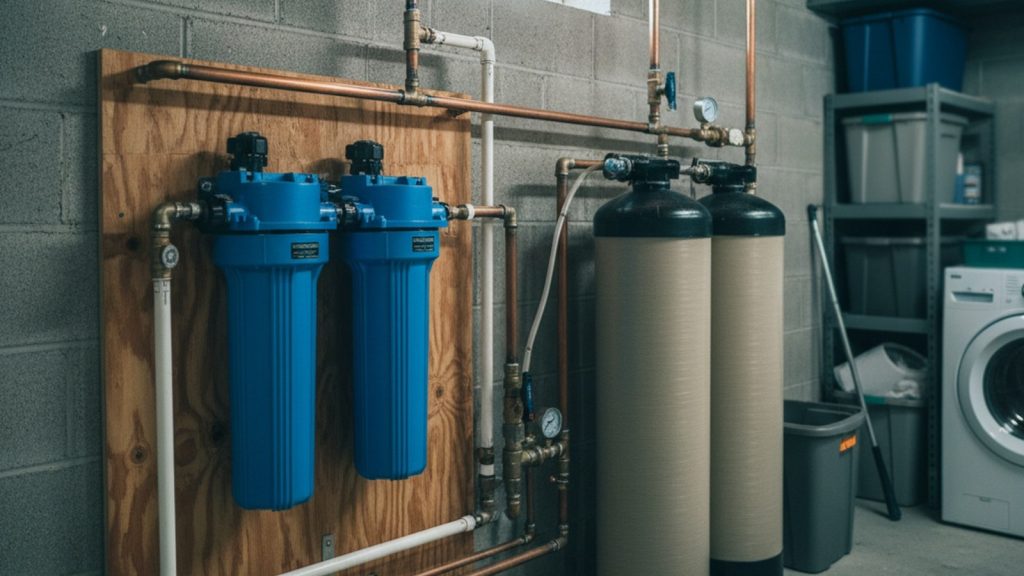
Order matters. Sediment comes out first, because grit fouls every device downstream of it. Iron and manganese get oxidized and filtered next, because they will clog a softener’s resin bed. Disinfection, whether chlorination or ultraviolet light, comes after the water is already clear. Skip a stage and the next one wears out early or stops working altogether.
Sediment filters themselves come in more than one style. Our sediment filter guide covers micron ratings and the spin-down-plus-cartridge setup most wells with real grit end up needing.
Signs Your Well Water Needs Treatment
Some contaminants announce themselves. Orange or reddish stains on sinks and laundry point to iron. A rotten-egg smell points to hydrogen sulfide gas. Water that feels slippery yet leaves white spots on glassware points to hardness. A metallic taste, cloudy water, or a well that runs sandy after heavy rain all have specific causes worth naming before you shop for equipment.
Other contaminants give no warning at all. Bacteria, nitrate, and arsenic are invisible, odorless, and tasteless at levels that still carry health risk. A private well can look and taste perfectly clean and still fail a coliform test. That is why a lab result, not a walk around the house, is the real starting point for choosing a well water filtration system.
Which Filter Matches Your Contaminant
The table below maps the common categories of well water filtration equipment to what each one actually treats. Use it as a starting matrix, then confirm your specific numbers against a certified lab test before buying anything.
For a closer look at what each filter category actually removes and how long it lasts, our well water filter guide breaks down sediment, carbon, oxidizing, softening, UV, and reverse osmosis stages one by one.
| System | Treats | Typical setup |
|---|---|---|
| Sediment filter | Sand, silt, rust particles | Point-of-entry cartridge or spin-down filter, first stage in the line |
| Water softener (ion exchange) | Hardness (calcium, magnesium), light ferrous iron | Whole-house mineral tank plus brine tank, regenerates on a timer or meter |
| Iron and manganese filter | Dissolved iron, manganese, some sulfur odor | Whole-house backwashing filter, often paired with an air injector |
| Activated carbon filter | Chlorine taste and odor, some organic compounds, PFAS, mild sulfur smell | Whole-house tank or point-of-use cartridge |
| Chlorination with filtration | Bacteria, high hydrogen sulfide, high iron | Chemical feed pump, retention tank, carbon filter to strip residual chlorine |
| Ultraviolet disinfection | Bacteria and viruses | Point-of-entry UV lamp, requires clear, sediment-free water to work |
| Reverse osmosis | Nitrate, arsenic, lead, PFAS, dissolved solids | Point-of-use under the kitchen sink, occasionally whole-house |
The CDC’s own guidance for treating private well water states plainly that no single treatment type protects against all problems, and that filtering, distilling, and disinfecting each solve different issues.
One contaminant more homeowners are asking about is PFAS, the “forever chemicals” that turn up in some groundwater. The EPA recognizes activated carbon filtration and reverse osmosis as treatment options for PFAS, so if a test flags it, those are the two categories in the table above worth asking an installer about.
The Real Challenges of Choosing a Well Water Filtration System
The first challenge is that symptoms overlap. A metallic taste can mean iron, manganese, or low pH corroding your pipes. A rotten-egg smell can mean sulfur bacteria in the well, in the water heater, or both. Guessing from smell and stains alone sends homeowners toward the wrong equipment more often than it sends them toward the right one.
The second challenge is sizing. A filtration system rated for a contaminant at 2 parts per million will not keep up if your well is running 15. Manufacturers publish maximum treatment levels for a reason, and installing an undersized unit means it fails quietly, right up until stains or odor come back.
The third is sequencing cost. Homeowners who buy a softener first because it is the most familiar product often find out later they needed a sediment pre-filter and an oxidizing filter ahead of it. Buying in the wrong order means paying for the same fix twice.
Pricing that sequence out before buying anything keeps the wrong-order mistake from happening. Our well water filtration system cost guide breaks down what each stage runs by the problem it solves.
The fourth is upkeep. Sediment cartridges need the most frequent swaps, a UV bulb loses its disinfecting strength before it visibly fails and needs replacing on a schedule rather than by sight, and a reverse osmosis membrane is the least frequent replacement but the most expensive one. A system only keeps working if someone keeps servicing it.
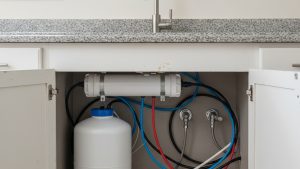
Installation is its own decision. A spin-down sediment filter or an under-sink reverse osmosis unit is simple enough for a handy homeowner to install. A whole-house backwashing iron filter, a chlorination feed system, or anything tied into the well’s wiring and plumbing is a job for a licensed plumber or water treatment professional.
If a lab test shows total coliform bacteria or E. coli in your well, stop drinking the water immediately and switch to bottled or another safe source. Filtration alone is not a substitute for shock chlorinating the well and retesting until the result comes back clean.
Whole-House vs. Point-of-Use: Which Setup Do You Need?
A whole-house, or point-of-entry, system treats every tap in the home: showers, laundry, dishwasher, kitchen sink. It is the right call for anything that affects plumbing or skin, like hardness, iron staining, or sulfur odor in the shower.
A point-of-use system, usually reverse osmosis under the kitchen sink, treats only the water you drink and cook with. It makes sense for contaminants that matter for ingestion but not for laundry, like nitrate or arsenic, and it costs far less than treating the whole house for the same chemical.
Most well owners end up layering systems rather than buying one. A typical stack is a sediment pre-filter, an iron or softener stage sized to the test results, and either UV or point-of-use reverse osmosis depending on what the lab found.
How to Choose the Right Well Water Filtration System
Start with a certified lab test, not a filter catalog. The test tells you which contaminants are present and at what concentration, which is the only information that actually determines equipment. Buying before testing is the single most common way homeowners overspend on the wrong well water filtration system.
Once you have numbers, size equipment to the highest reading, not the average, since well water quality shifts with rainfall and season. Ask any installer for the manufacturer’s certified capacity in writing, and confirm your setup addresses sediment first, chemistry second, and disinfection last.
Request an iron, manganese, hardness, pH, and coliform bacteria panel at minimum. These five results alone rule in or out most of the equipment categories in the comparison table above.
Testing first is the decision that determines everything downstream of it, including which category in the well water testing resources on this site to read next.
Frequently Asked Questions (FAQs)
What is a well water filtration system?
It is equipment, often a combination of stages, installed on a private well to remove specific contaminants: sediment, iron, hardness, bacteria, sulfur gas, or dissolved chemicals. Which stages you need depends entirely on your water test results.
What type of filtration does well water need?
It depends on what a lab test finds. Sediment filters handle grit, softeners handle hardness, oxidizing filters handle iron and manganese, and reverse osmosis handles nitrate and arsenic. Most wells need two or three of these working together, not one universal unit.
How much does a whole house filter cost?
Cost varies with the contaminants being treated, the flow rate needed, and whether one stage or several are installed. Get a written quote based on your specific test results and household water usage rather than a generic online estimate.
Do I need UV light for well water?
UV disinfection makes sense when a test shows bacteria or viruses in the well. It requires clear, sediment-free water to work, so it typically goes at the end of the treatment line, after any sediment or iron filtering stage.
What is the best water filter for well water with iron and sulfur?
Iron and sulfur usually need different stages, not one product. An iron and manganese filter, often paired with an air injector, handles the staining. The rotten-egg smell responds to activated carbon at low concentrations and to chlorination with filtration at higher ones. A lab test showing both concentrations determines the combination.