Updated 30 September 2026
Replacing a shallow jet pump is a realistic DIY project: shut off power, drain the system, disconnect the pump, swap it, and reprime. Replacing a submersible pump in a deep well involves pulling heavy pipe strings and underwater wiring, and is usually a job for a licensed well pump contractor.
Before learning how to replace a well pump, the honest first question is whether you should be the one doing it. HomeAdvisor is direct about it: replacing a well pump is not typically a do-it-yourself task, since it combines electrical wiring near water with equipment set deep underground, often requiring a derrick truck to pull and reset the casing.
The type of pump changes that calculus. The USGS identifies jet pumps as the standard for shallow wells of 25 feet or less, mounted above ground, where a homeowner can reach every fitting without pulling pipe from a casing. Submersible pumps, standard for deeper wells, sit inside the casing itself and are a different job entirely.
A shallow jet pump replacement is genuinely within reach for a homeowner comfortable with basic plumbing and electrical work. A deep submersible replacement, with its heavy pipe strings and underwater wiring splices, is where most people are better off calling a well pump contractor.
Restart First: Rule Out a Simple Fix
Before assuming the pump itself has failed, check the easy things first. A tripped breaker, a tripped pressure switch reset, or a pump that simply lost its prime after a power outage can all look exactly like pump failure without actually being one.
This guide sits in our Wells & Pumps section alongside the priming how to and the pressure switch guide.
Reset the breaker, check the pressure switch for a reset lever, and confirm the pump has power reaching it. Learn how to prime a well pump if the system has power but is not delivering water, since a lost prime is a five-minute fix, not a replacement.
Challenges of Well Pump Replacement
Diagnosing the actual failure is the first challenge, since a bad pressure switch, a waterlogged tank, and a dead pump all produce similar symptoms at the faucet. Replacing the wrong part first wastes money and still leaves the real problem unsolved.
Well depth is the second challenge. Pulling pipe from a 200-foot well by hand is not realistic, and even experienced DIYers usually rent or borrow specialized pipe-pulling equipment for anything beyond a shallow well.
Electrical safety is the third challenge. Submersible pump wiring runs underwater inside the casing, and a faulty splice at that depth is both dangerous and difficult to diagnose without pulling the entire pump string back up.
Equipment You Need for a DIY Jet Pump Replacement
- New jet pump matched to the well’s depth and the household’s flow demand; check the old pump’s data plate for horsepower, flow rate, and voltage before buying a replacement
- Pipe wrenches and channel-lock pliers for disconnecting fittings
- Teflon tape or pipe joint compound for reassembling threaded connections
- A voltage tester to confirm power is fully disconnected before touching wiring
- A bucket and towels for the water still sitting in the housing and lines
- A funnel for repriming the system once the new pump is installed
How to Replace a Shallow Jet Pump: Step by Step
- Shut off power at the breaker. Confirm with a voltage tester before touching any wiring on the pump.
- Close the shutoff valves and drain the system. Open a drain plug or a nearby faucet to relieve pressure and empty standing water from the pump housing and lines.
- Disconnect the wiring. Note or photograph the wire connections before removing them so the new pump goes back together the same way.
- Disconnect the suction and discharge pipes. Use pipe wrenches to break the fittings loose, supporting the pipe so it does not drop or twist once free.
- Remove the old pump. Lift it clear of its mounting once every connection is disconnected.
- Set the new pump and reconnect the pipes. Apply fresh Teflon tape or joint compound to every threaded connection to prevent leaks and future air intrusion.
- Reconnect the wiring to match the original layout. Double-check every connection against your notes or photos before restoring power.
- Prime the pump and test. Fill the housing with water, restore power, and run the system until it delivers steady, consistent pressure with no sputtering.
Always cut power at the breaker and confirm it with a voltage tester before touching any wiring, fitting, or connection on a well pump. Water and live electrical components are a dangerous combination, and a pump that unexpectedly restarts mid-repair can cause serious injury.
Why Submersible Replacement Is a Pro Job
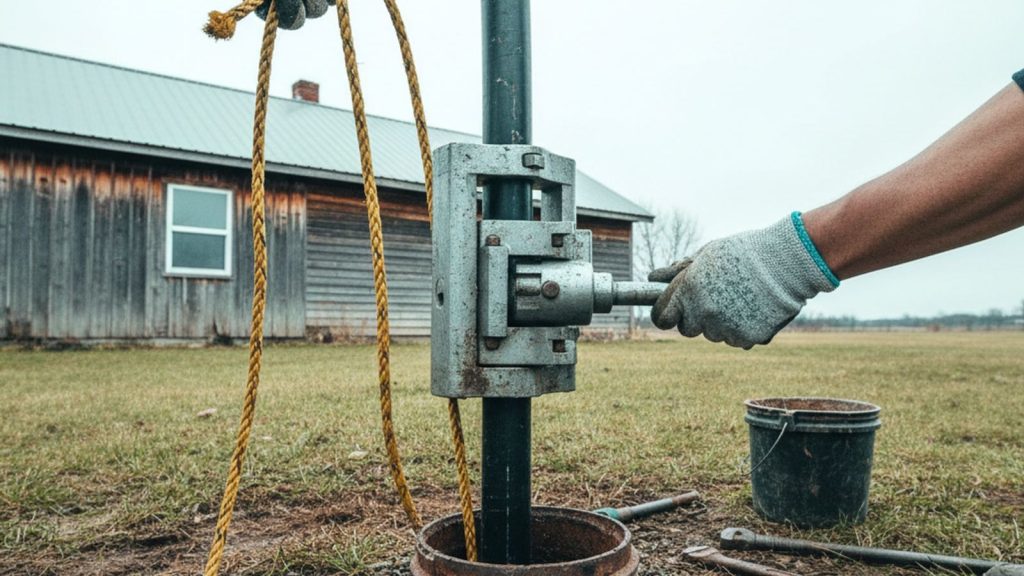
A submersible pump sits at the bottom of a pipe string that can weigh hundreds of pounds once it is full of water and wire. Pulling that string safely requires either a well-rigging setup or a truck-mounted derrick, equipment most homeowners simply do not own.
Whether a jet or submersible pump is the right fit in the first place is worth confirming before any replacement job starts. Our submersible vs jet well pump comparison covers the tradeoffs of each.
The electrical splice connecting the pump to the surface wiring sits underwater at whatever depth the pump is set, and it has to be sealed correctly to survive years submerged. A poor splice fails quietly underwater long before anyone notices, and re-diagnosing it means pulling the entire pipe string again.
The line between DIY-realistic and pro-only is not about skill level, it is about well depth and pump type. A confident DIYer with a shallow jet pump can handle the job safely; the same person with a 150-foot submersible well should call a contractor, not because the wiring is complicated, but because the equipment to safely pull the pipe string is specialized.
Photograph every wiring connection before disconnecting anything, even on a job you feel confident about. A five-second photo saves a confusing half hour later trying to remember which wire went where.
Replace the Check Valve and Control Box While You’re There
Two supporting parts deserve replacement in the same job. The check valve is a cheap wear item that keeps water from draining back down the well between cycles, and a tired one makes a brand-new pump short-cycle from day one; swapping it while the pipe string is already out adds almost nothing to the job. The control box, on three-wire submersibles, holds the start capacitor and relay, and if the old pump died electrically those components are suspects, so a matched new box protects the new motor. Two-wire submersibles have no external control box to replace.
After the Swap: Flush, Disinfect, Retest
The new pump is not finished when the water turns back on. Run an outside spigot until the water clears of sediment stirred up by the work, then shock chlorinate, any job that opened the well calls for disinfection, and follow with a coliform bacteria test one to two weeks later to confirm the well is clean. Finally, check the pressure tank’s air charge against the switch’s cut-in setting so the new pump starts life cycling correctly instead of inheriting the old system’s problems.
How to Decide Between DIY and Hiring a Pro
Start with the pump type. A shallow jet pump above ground is a reasonable weekend project for someone comfortable with basic plumbing and electrical work; a submersible pump in a deep well is not.
Weigh the cost of a mistake. A jet pump replacement gone wrong means a return trip to the hardware store; a submersible pump dropped back down a well casing, or a bad splice sealed underwater, means paying a contractor to fix the DIY attempt on top of the original job.
If the well is deep, the pump is submersible, or the job involves pulling pipe you cannot lift safely, call a licensed well pump contractor. Well pump replacement cost by pump type and depth shows what professional installation actually runs, so there are no surprises when the quote comes in.
Replacement is the right answer only once the pump is confirmed as the fault. Our well pump failure signs guide lists the checks that rule out the cheaper causes first.
Frequently Asked Questions (FAQs)
Can I replace a well pump myself?
Yes, if it is a shallow jet pump mounted above ground, replacement is a realistic DIY project for someone comfortable with basic plumbing and electrical work. A submersible pump in a deep well is usually better left to a licensed contractor with the equipment to safely pull the pipe string.
How long does replacement take?
A shallow jet pump replacement typically takes a few hours for someone working carefully through each step. A submersible pump replacement takes longer once pipe-pulling equipment, well depth, and wiring splices are factored in.
What are the submersible replacement steps?
Submersible replacement means pulling the entire pipe string from the well, disconnecting the pump and its underwater wiring splice at the surface, attaching the new pump, and lowering the full string back down while resealing the splice. The weight and depth involved make this a job for a contractor with proper rigging equipment in most cases.
When should I hire a pro instead of DIY?
Hire a pro whenever the pump is submersible, the well is deep, or the job requires pulling pipe heavier than you can safely lift. HomeAdvisor notes that well pump replacement typically involves electrical work near water and specialized equipment most homeowners do not own.
How do I restart a well pump that stopped working?
Check the breaker, look for a reset lever on the pressure switch, and confirm the pump still has power before assuming it has failed. A pump that lost its prime after a power outage often needs nothing more than repriming to start working again.



