Updated 30 September 2026
Test for bacteria every year and for a broader panel, nitrate, arsenic, lead, hardness, every three to five years. Test again immediately after any well repair, flooding near the wellhead, a new water quality change, or before a pregnancy, regardless of when the last test was done.
Two state health agencies land on nearly the same schedule. The Wisconsin DNR recommends testing for bacteria once a year and testing for nitrate once a year, more often if a pregnant woman lives in the house. New York’s health department goes further, spelling out a full rotation.
The New York State Department of Health advises testing at the tap at least once a year for bacteria and every three to five years for other contaminants like lead, arsenic, and hardness, with late spring or early summer as the best window to sample. Knowing how often to test well water means treating that annual bacteria check as fixed and building everything else around real triggers.
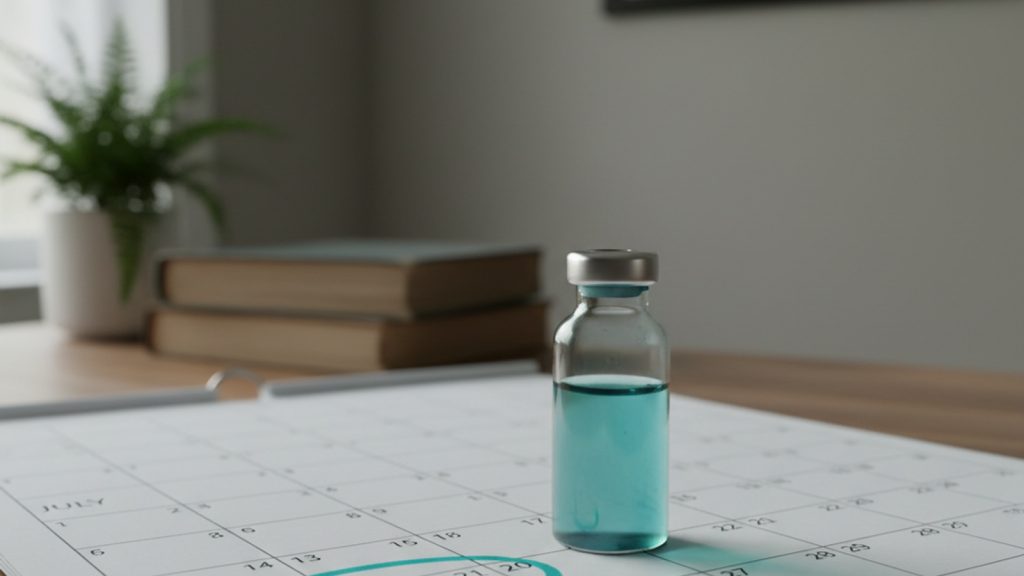
A calendar reminder handles the annual part. What most homeowners miss are the events that call for an immediate retest, regardless of where the well sits in its normal cycle, a repair, a flood, a new smell, that reset the clock the day they happen.
How Often Should You Test Your Well Water?
Bacteria testing happens every year without exception. Total coliform and E. coli can appear from a single new pathway into the well, a cracked seal, a flood, a nearby septic issue, so an annual check is the only way to catch that before it becomes a health problem nobody noticed.
This schedule sits in our Water Testing section alongside the how to test comparison and the guide to reading a finished report.
Nitrate follows the same annual cadence, especially in households with an infant, a pregnant woman, or anyone planning a pregnancy. Nitrate has no smell, taste, or color, and the health risk it carries for infants makes a yearly check worth the small added cost of running it alongside the bacteria sample.
The broader panel, arsenic, lead, hardness, pH, iron, and manganese, runs on a longer three-to-five-year cycle. These parameters shift slowly compared to bacteria and nitrate, so testing them annually adds cost without adding much useful information for most wells.
Arsenic is the exception to the five-year rule in parts of Wisconsin. Most well users test for it once every five years, but residents of Outagamie, Winnebago, or Brown counties, or anyone with a previous arsenic detection, should test every year instead.
New York’s guidance lists the full three-to-five-year rotation by name: lead, nitrate, nitrite, arsenic, sodium, iron, manganese, turbidity, pH, hardness, and alkalinity. Running all of them together in one submission is usually cheaper than ordering each one separately over several years, and it gives you a single baseline report to compare future results against.
Two schedules working together cover most of what a well owner needs to know. The annual bacteria and nitrate check catches the fast-moving risks, and the multi-year full panel catches the slow-moving ones, corrosion-driving pH, scale-building hardness, metals that accumulate gradually rather than spiking overnight.
Once a report is in hand, the numbers themselves need translating. Our guide to reading well water test results covers what each parameter means and which ones call for immediate action.
The Events That Call for an Immediate Retest
Certain events matter more than the calendar date. Any of these should send you back to a certified lab immediately, whether or not the well is due for its scheduled test.
| Event | Test within | What to test |
|---|---|---|
| Well repair or new pump installed | 1 to 2 weeks | Total coliform bacteria |
| Flooding near the wellhead | Immediately after floodwater recedes | Bacteria; nitrate if agricultural runoff is nearby |
| New taste, odor, or color | As soon as noticed | Matches the symptom: sulfur odor, iron staining, or bacteria |
| Pregnancy or new infant in the household | Before the water is used for formula | Nitrate and bacteria |
| New construction or industrial activity nearby | Within a month of the activity starting | Full panel matched to the activity type |
A scheduled test catches slow drift. A trigger-based retest catches a sudden change. Skipping the second kind because the well “just tested fine” a few months ago is how a flood-contaminated well goes undetected for a season.
Not every trigger needs the same lab turnaround. A bacteria retest after a repair is worth rushing, since the household is drinking from that well while the result is pending. A full metals panel after new construction nearby can wait the normal week or two a certified lab needs, since those contaminants build up gradually rather than appearing overnight.
Challenges to Sticking With a Testing Schedule
Private wells carry no reminder system. City water customers get an annual quality report mailed to them automatically; well owners have to schedule everything themselves, and testing quietly lapses for years once the novelty of a new well wears off.
Spring timing works for a reason that’s easy to forget. Testing in late spring or early summer catches the season when snowmelt, spring rain, and fertilizer runoff are most likely to push nitrate and bacteria into shallow groundwater, giving you the most conservative read of the year.
A new symptom overrides the calendar entirely. If the change is an odor rather than a number, our well water smells like sulfur guide covers how to trace it before ordering a test.
The third challenge is treating a clean result as permanent. A well that tests clean today can pick up contamination next month if a septic system nearby starts failing or a neighbor’s well work disturbs the aquifer. There is no such thing as a lifetime clean bill of health for a private well.
Cost adds a fourth challenge, though a smaller one than most homeowners expect. Skipping a year to save on lab fees puts the real cost on the other side of the ledger: a bacteria problem caught a year late means more plumbing exposed to contaminated water and a longer, more expensive disinfection process once it’s finally found.
Set the annual bacteria and nitrate test to a date you already track, a birthday, tax season, the first day of spring, and put it on a recurring calendar reminder rather than relying on memory.
How to Build a Testing Schedule You’ll Actually Keep
Anchor the annual bacteria and nitrate test to spring, when both contaminants are most likely to show up. Layer the three-to-five-year full panel on top, adjusted to whatever your state’s guidance flags as a regional concern, arsenic in parts of the upper Midwest and New England, for instance.
Build the trigger list into your household routine rather than your calendar. A retest after a repair, a flood, or a new symptom doesn’t wait for a scheduled date; it happens within days of the event, before the water goes back into regular use.
Once a schedule is set, retest after every shock chlorination too, closing the loop instead of assuming the treatment worked. A positive bacteria result is not resolved until a follow-up sample confirms it.
Where to Get Tested Free or at Cost
The annual check does not have to run through a commercial lab at full price. Many county and local health departments offer free or subsidized bacteria and nitrate testing for private wells, and some states run free screening programs after floods or in areas with known contamination. Even where the test itself carries a fee, health departments typically sell certified sample kits at cost and keep the state-certified lab list on hand. Call the county health department before paying a commercial lab; the broader multi-year panel usually still means a paid certified lab, but the annual bacteria and nitrate check is the part most often covered.
Annual testing is affordable when the panel is chosen deliberately. Our testing cost guide shows what each package costs at an accredited laboratory and where free county testing is available.
Frequently Asked Questions (FAQs)
When is the best time to test?
Late spring or early summer is the recommended window, since snowmelt and spring rain are most likely to carry bacteria and nitrate into shallow groundwater. Testing during this period gives you the most conservative annual read of your well.
How much does testing cost?
Cost depends on the lab and how many parameters are included. An annual bacteria and nitrate test costs less than the broader three-to-five-year panel, since that panel covers more contaminants in one submission.
What should I test my well water for every year?
Test for total coliform bacteria and nitrate every year without exception. The broader panel, arsenic, lead, hardness, pH, iron, and manganese, only needs testing every three to five years unless a regional concern or a previous detection calls for more frequent checks.
When should I retest after repairs?
Retest for bacteria within one to two weeks of any repair that opened the well casing or involved a new pump. A repair creates a fresh opportunity for contamination to enter the system, regardless of when the last scheduled test happened.
What triggers an immediate well water retest?
A well repair, flooding near the wellhead, a new taste or odor, a pregnancy, or new construction near the well all call for testing right away. These events override the normal calendar since they can introduce contamination between scheduled tests.



