Updated 30 September 2026
Brown or rust colored well water is almost always dissolved iron or manganese that oxidizes on contact with air (order an iron and manganese test first), or fine sediment stirred up in the aquifer or plumbing. Yellow tints usually point to iron combined with tannins from decaying plant matter, while red or orange slime in fixtures often signals iron bacteria. A water test, not the color itself, confirms which one you have.
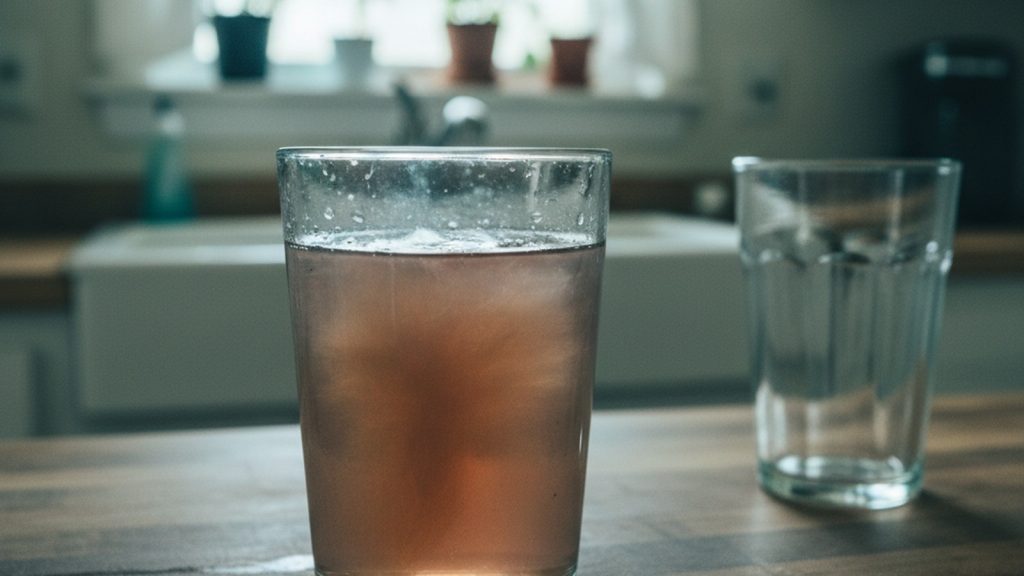
Rust colored well water is almost always dissolved iron or manganese, and the U.S. Geological Survey explains that as groundwater flows through sediment, metals such as iron and manganese dissolve and can later show up in high concentrations in the water, which is the single biggest reason well water turns brown, yellow, or red. Turn on the tap and get a glass of rust colored water and the first question is never scientific. It is simply: what is this, and can I drink it?
Color alone will not tell you which mineral, or whether bacteria are involved, so PrivateWellClass.org recommends testing well water annually for bacteria, nitrates, and any local contaminants of concern, calling testing the only way to actually know what is in your water. That advice matters here: two wells can produce the same rust colored water for two completely different reasons.
By the time most homeowners search why is my well water brown, they have already seen the practical damage: an orange ring in the toilet bowl, a load of white laundry pulled out with rust streaks, or a coffee maker that tastes metallic. The water often looks clear in a glass, then turns cloudy or tinted after it sits for a few minutes. None of that tells you the cause on its own. It tells you where to start looking.
If a bacteria test also comes back positive alongside the discoloration, disinfection comes first. Our how to clean well water guide covers the shock chlorination steps in full.
Color-by-Color: What Your Well Water Is Telling You
Timing and pattern narrow the cause faster than color alone. Use this table as a first pass, then confirm with a lab test before choosing a fix.
This diagnosis guide sits in our Well Water Problems section alongside the iron staining guide and the sulfur odor guide.
| Color / pattern | Most likely cause | Test to confirm |
|---|---|---|
| Rust orange, all taps, all day | Dissolved iron oxidizing in the plumbing | Iron and manganese test |
| Pale yellow or tea tinted | Tannins from organic matter, often with iron | Tannin (color) and iron test |
| Red, orange, or pink slime in tanks and fixtures | Iron bacteria colonizing pipes or the well casing | Iron bacteria culture test |
| Brown, cloudy, clears after running | Sediment or turbidity disturbed in the well | Turbidity and sediment test |
| Brown only from the hot tap | Sediment or a corroding anode rod in the water heater | Inspect the water heater tank and anode |
| Sudden brown after clear water | Well disturbance: new pump, nearby drilling, or flooding | Full water test after the disturbance settles |
Groundwater is an efficient solvent. As it moves through rock and soil it dissolves naturally occurring minerals, and iron and manganese are two of the most common. The same USGS research notes that groundwater will generally carry more dissolved substances than surface water simply because of how long it stays in contact with sediment.
Source: U.S. Geological Survey, Water Science School, Groundwater Quality
The Common Culprits Behind Brown Well Water
Four causes account for nearly every case of discolored well water, and they behave differently once the water leaves the tap.
Dissolved iron is the most frequent cause. It enters the water clear, then oxidizes to a rust color the moment it contacts air, which is why brown water often gets worse in a glass left standing. See our full breakdown in iron in well water for concentration ranges and fix options.
Manganese behaves like a darker cousin of iron, staining fixtures black or brown-black instead of orange. Tannins come from decayed leaves and vegetation seeping into shallow aquifers, giving water a yellow or tea like tint that is cosmetic rather than dangerous on its own. Sediment and turbidity are physical, not chemical: fine particles of clay, silt, or rock get pulled into the well and cloud the water without any staining once it settles.
When sediment turns out to be the cause, matching the filter to the actual particle size matters. Our sediment filter guide covers micron ratings and the two-stage setup that handles real grit.
Well Water Testing Challenges Homeowners Run Into
Diagnosing brown water from the kitchen sink is harder than it looks, and three challenges trip up most homeowners before they call for help.
The first challenge is that colors overlap. Iron and manganese can both produce a brownish tint, and only a lab test separates the two, since they call for different filter media. The second challenge is timing confusion: water that is only brown from the hot tap points to the water heater, not the well, and treating the well would fix nothing. The third challenge is inconsistency. Iron bacteria colonies can slough off in bursts, so the water runs clear for days, then discolors for an afternoon, making the problem look intermittent when it is actually constant and low grade.
Confirmed iron bacteria calls for disinfection before any filter goes in. Our shock chlorination guide covers dosing by well depth and casing size.
If your water is brown some days and clear on others, do not assume the problem resolved itself. Iron bacteria and fluctuating sediment loads both produce that on-and-off pattern, and a single clear glass does not rule either one out.
Brown water by itself is usually a nuisance, not a health emergency. Treat it as urgent if the color change follows flooding, a nearby septic failure, or new construction near the well, and stop drinking the water until a lab test rules out bacterial contamination.
Ruling Out Sediment, Iron, and Bacteria at Home
- Check every faucet. Run hot and cold water at two or three fixtures. Water that is brown everywhere points to the well or main line; brown only at one tap points to that fixture or its supply line.
- Isolate hot from cold. If only hot water discolors, the water heater tank or anode rod is the likely source, not the well itself.
- Watch how it clears. Sediment settles out of a glass left standing for ten minutes. Dissolved iron does the opposite: clear water turns rustier as it sits and oxidizes.
- Look for slime, not just color. A reddish, slippery film inside the toilet tank or on the inside of removed aerators is a strong sign of iron bacteria rather than simple mineral staining.
- Get a lab test before buying equipment. Iron, manganese, tannins, and iron bacteria each need a different filter approach, and guessing wrong wastes money on the wrong system.
Ask the lab for iron reported as both total and dissolved (ferrous versus ferric). Ferrous iron passes through some filters that ferric iron would not, so the split matters more than the total number.
How to Match Your Well Water Treatment to the Real Cause
Once a test confirms whether you are dealing with dissolved iron, manganese, tannins, sediment, or iron bacteria, the fix becomes straightforward. Oxidizing filters, often an air-injection or manganese greensand system, and water softeners handle low to moderate dissolved iron and manganese. Sediment filters catch turbidity before it reaches fixtures. Tannin resin targets the yellow tint that iron treatment alone will not remove. Iron bacteria usually calls for shock disinfection followed by ongoing filtration to prevent regrowth in the casing and pipes.
Matching the system to the lab results, rather than to the color you see in the glass, is what keeps a treatment plan from underperforming. See our well water testing guide to choose the right panel before you invest in equipment.
Frequently Asked Questions (FAQs)
What causes brown well water?
Brown well water is most often dissolved iron or manganese that oxidizes after leaving the tap, or fine sediment stirred up in the aquifer or plumbing. Iron bacteria and a failing water heater anode are the next most common causes. A lab test identifies which one applies to your well.
Is brown water safe to drink?
Iron, manganese, and sediment are nuisance issues rather than acute health risks at typical well concentrations, so brown water from those causes is usually not dangerous. Stop drinking it and get a bacteria test if the discoloration started after flooding, storms, or nearby construction, since those events can introduce contamination alongside the color change.
How do I fix brown well water?
Confirm the cause with a lab test first, then match the fix to the result: oxidizing filtration or a softener for iron and manganese, sediment filters for turbidity, tannin resin for the yellow tint, and shock disinfection for iron bacteria. Treating the wrong contaminant wastes money without clearing the water.
Why did my water suddenly turn brown?
A sudden change from clear to brown usually means the well or aquifer was physically disturbed, by a new pump, nearby drilling, heavy rain, or flooding, and sediment or iron got stirred loose. Run the taps for several minutes and retest; if the color persists past a day or two, schedule a full water test.
Can I shower or do laundry in brown well water?
Showering is generally fine when the discoloration is iron, manganese, or sediment, though iron can leave hair feeling dull until the system is treated. Laundry is the bigger risk: washing whites or light colors in water like this can oxidize and set orange or brown stains into the fabric. Hold laundry, whites especially, until a test confirms the cause and any fix is in place.



